Jun 17, 2026Buying Guides
How to Evaluate a Sex Toy Manufacturer Before Placing a Private Label Order
Understand how B2B buyers can evaluate a sex toy supplier before a private label order, covering materials, compliance, QC, MOQ, packaging, lead time, and red flags.
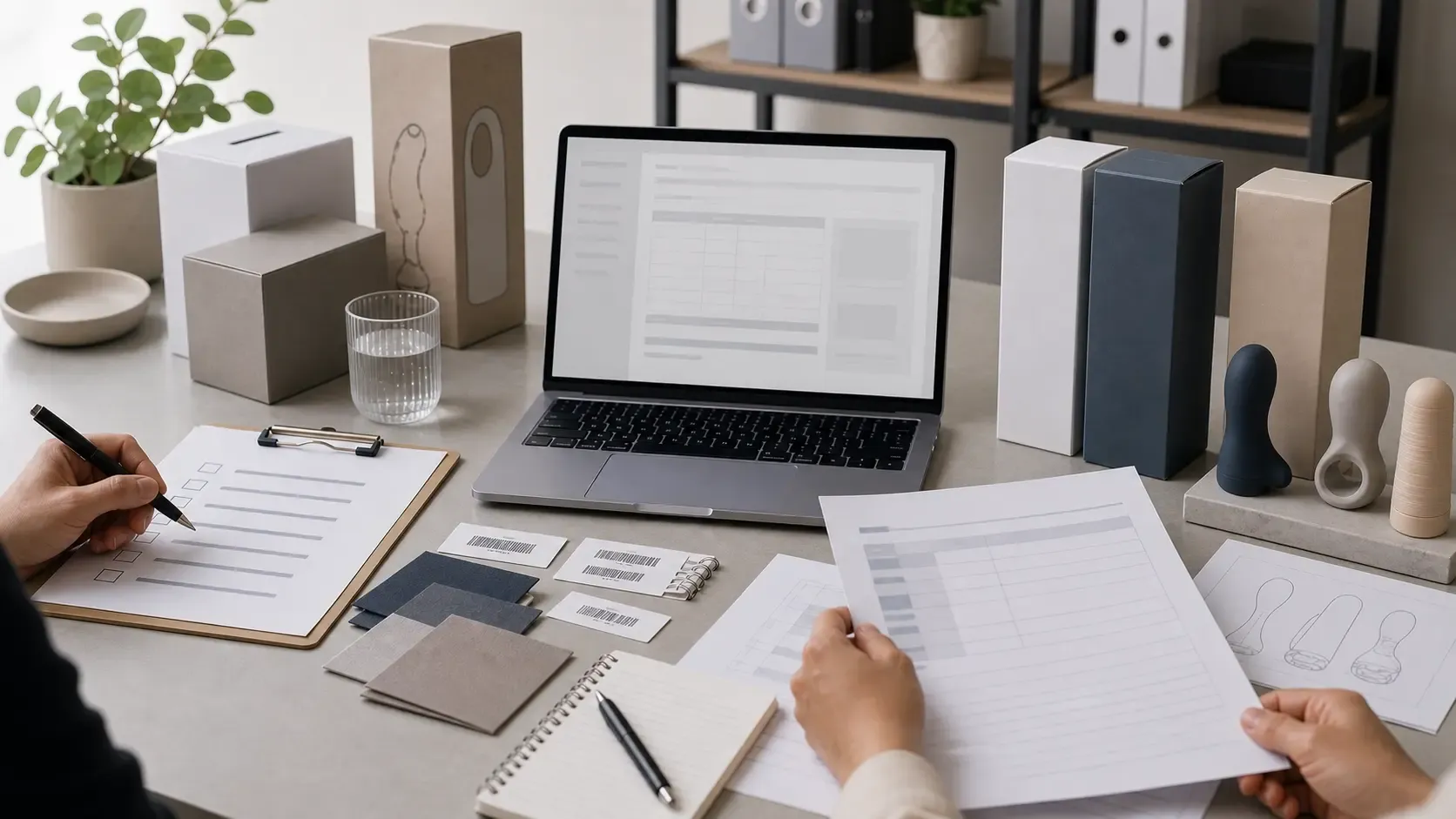
A sample can look excellent, yet the bulk order arrives with color differences, weaker motors, poor finishing, missing documents, or incorrect packaging. A “low MOQ” may exclude custom colors, logo printing, or branded boxes.
For B2B buyers, choosing an adult toy manufacturer, adult toy supplier, or sourcing partner is not just about unit price. It is about stable quality, suitable documents, customization terms, and realistic lead times. Whether working with a factory, trading company, or sourcing partner, clear specifications and communication matter.
Summary:
Before placing a private label order, buyers should confirm product-specific documents, quality control details, sample approval, MOQ conditions, packaging requirements, and lead time expectations.
Verify Materials and Safety Documents
Check the materials used in the complete product.
Depending on the model, this may include silicone, ABS, TPE, coatings, colorants, batteries, charging parts, and lubricants. Ask for material specifications and available test reports instead of accepting broad claims such as “premium” or “body-safe.”
Documents should match the product or material being purchased. A report for another model, color, or material may not support your order.
For rechargeable products, buyers may also need battery, charging component, and transport documents, especially for air shipment.
Match Compliance to the Product and Market
There is no single certificate that makes every adult wellness product suitable for every market.
Compliance depends on product type, materials, functions, and destination country. A non-electronic product may differ from a rechargeable, wireless, or app-connected model.
CE marking and RoHS may apply to certain electronic products in Europe, but they are not automatically required for all adult products. US and European buyers may also need to consider chemical restrictions, electrical safety, labeling, traceability, battery transport, and general safety rules.
Tell the adult toy supplier where the product will be sold. Request product-specific documents and check that model numbers and descriptions are consistent. Be careful if unrelated certificates are sent without explanation.
Confirm How Quality Control Works
“Every product is checked” is not a complete quality control plan.
Ask how materials, components, assembly, appearance, charging, noise, functions, and packaging are inspected, and how defects are handled.
Agree on measurable requirements, such as color tolerance, surface marks, motor performance, noise level, packaging condition, and defect limits.
Clear standards matter for private label adult toys. A simple supplier scorecard can compare quality control, documentation, MOQ flexibility, customization support, lead time, and communication.
Prevent Sample and Bulk Order Inconsistency
A good sample does not guarantee that the production order will be identical.
The sample may come from existing stock, while bulk production uses a new material batch or different components. Color, texture, motor strength, noise, and finishing can shift if specifications are unclear.
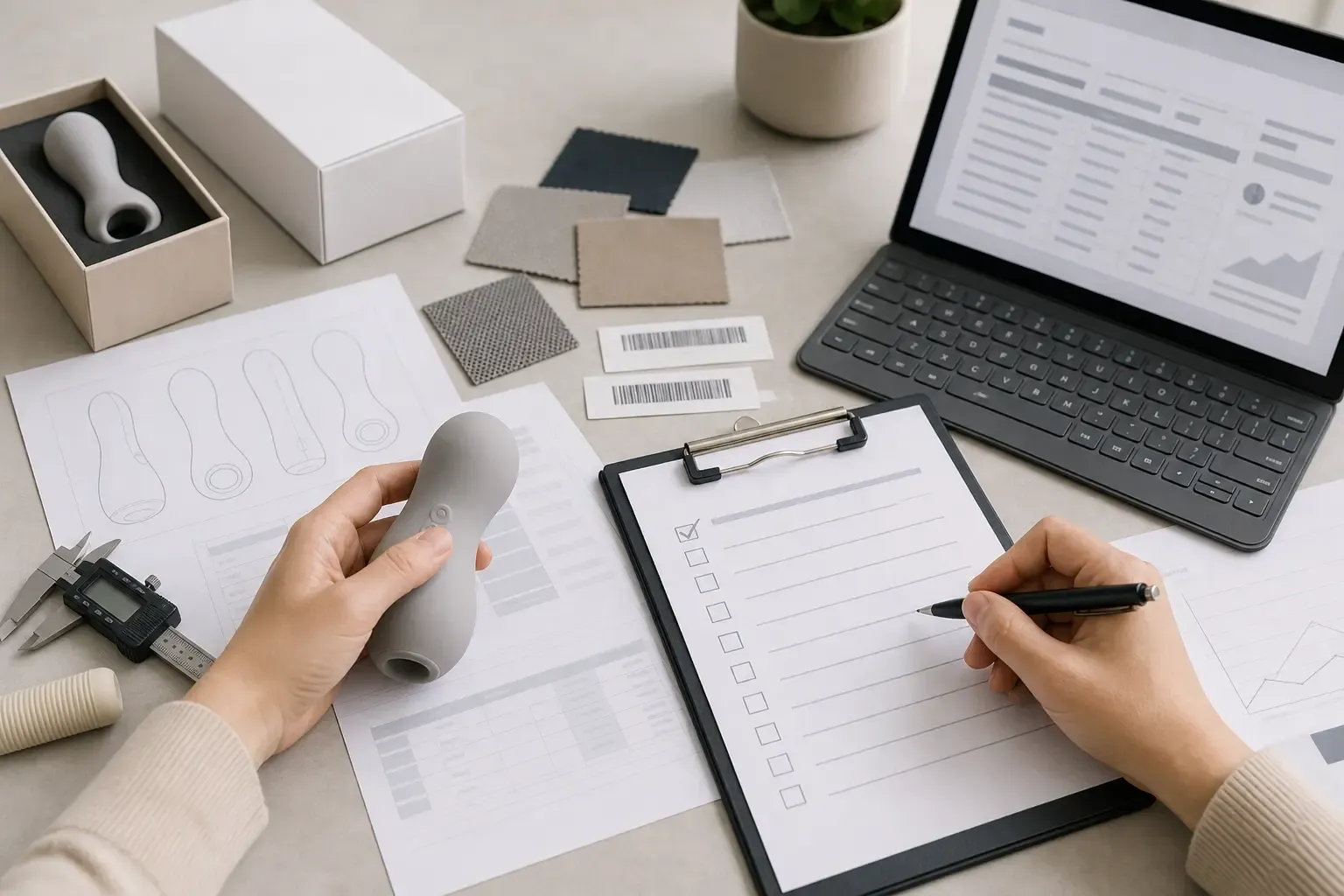
After approving the final sample, create a written specification covering the product, components, logo position, color reference, accessories, and packaging. Keep an approved reference sample. For larger customized orders, consider a pre-shipment inspection.
From our sourcing experience:
Projects are clearer when the approved sample, logo position, accessory list, and packaging artwork are confirmed in writing. This reduces confusion before mass production.
Clarify MOQ and Customization Conditions
MOQ is rarely one simple number.
A supplier or adult toy manufacturer may offer a low MOQ for a standard product but require higher quantities for a custom color, printed logo, exclusive packaging, or modified function. Custom packaging may also have its own MOQ.
Request a quotation that separates:
- Standard product MOQ
- Logo and color MOQ
- Custom packaging MOQ
- Tooling charges
- Testing costs
- Sample or delivery charges
This makes quotations easier to compare and helps prevent a “low MOQ” offer from becoming more expensive after development begins.
Also clarify what OEM, ODM, and private label mean. Adding a logo to an existing item is different from changing structure, electronics, or tooling.
From our sourcing experience:
MOQ discussions are easier when stock items, logo work, color changes, and packaging are quoted separately. Buyers can quickly see what is flexible.
Review Packaging Before Production
Weak packaging creates several risks. Products may move inside the box, printed colors may not match the approved artwork, barcodes may be unreadable, or required information may be missing.
Provide written requirements for box dimensions, materials, inserts, manuals, labels, barcodes, batch identification, and shipping cartons. Check wording carefully, especially warnings and translated text.
Approve a physical custom packaging sample whenever possible. A digital image cannot fully show print quality, box strength, product fit, or shipping durability.
From our sourcing experience:
Packaging issues often appear late when artwork, inserts, labels, and carton requirements are checked separately. Review the full packaging set together.

Quick Checklist Before Ordering
- Confirm product-specific documents
- Approve the final sample in writing
- Record logo, color, accessories, and packaging details
- Clarify MOQ for product, logo, color, and packaging
- Review physical packaging samples when possible
- Break down sampling, production, inspection, and shipping timelines
- Watch for unclear documents, rushed promises, or changing specifications
Challenge Unrealistic Lead Times
Fast production promises can be attractive, but unrealistic schedules often lead to rushed quality control or delays.
Ask the manufacturer, supplier, or sourcing partner to separate the timeline into sampling, artwork approval, material purchasing, production, inspection, and shipping. Custom colors, molds, electronic changes, and printed packaging usually need extra time.
Confirm when the lead time begins. It may start after deposit, final sample approval, or packaging artwork confirmation, not the first inquiry. A practical sourcing partner should flag delays early.
Recognize Common Supplier Red Flags
B2B buyers should investigate further when a supplier avoids written specifications, lacks product-specific documents, pushes bulk orders before sample approval, gives unclear MOQ terms, changes components without approval, promises every certificate for every product, ignores packaging or testing time, or has no clear defect process.
Key takeaway:
A reliable private label project depends on clear specifications, product-specific documents, realistic timelines, and consistent communication before production starts.
Discuss Your Private Label Project with Hotlove
Hotlove supports brands, wholesalers, importers, and retail buyers with wholesale-ready adult wellness products, private label adult toys, custom packaging, and selected OEM/ODM projects. We help buyers clarify product options, sourcing details, documents, and next steps.
Send us your target market, product interests, estimated quantity, packaging requirements, and launch schedule.
We will review what is workable, what should be confirmed, and what to prepare before sampling or quotation.